

Live Spot Gold
Bid/Ask
5,198.605,200.60
Low/High
5,130.305,206.40
Change
+34.50+0.67%
30daychg
-48.10-0.92%
1yearchg
+2,300.30+79.37%
Silver Price & PGMs
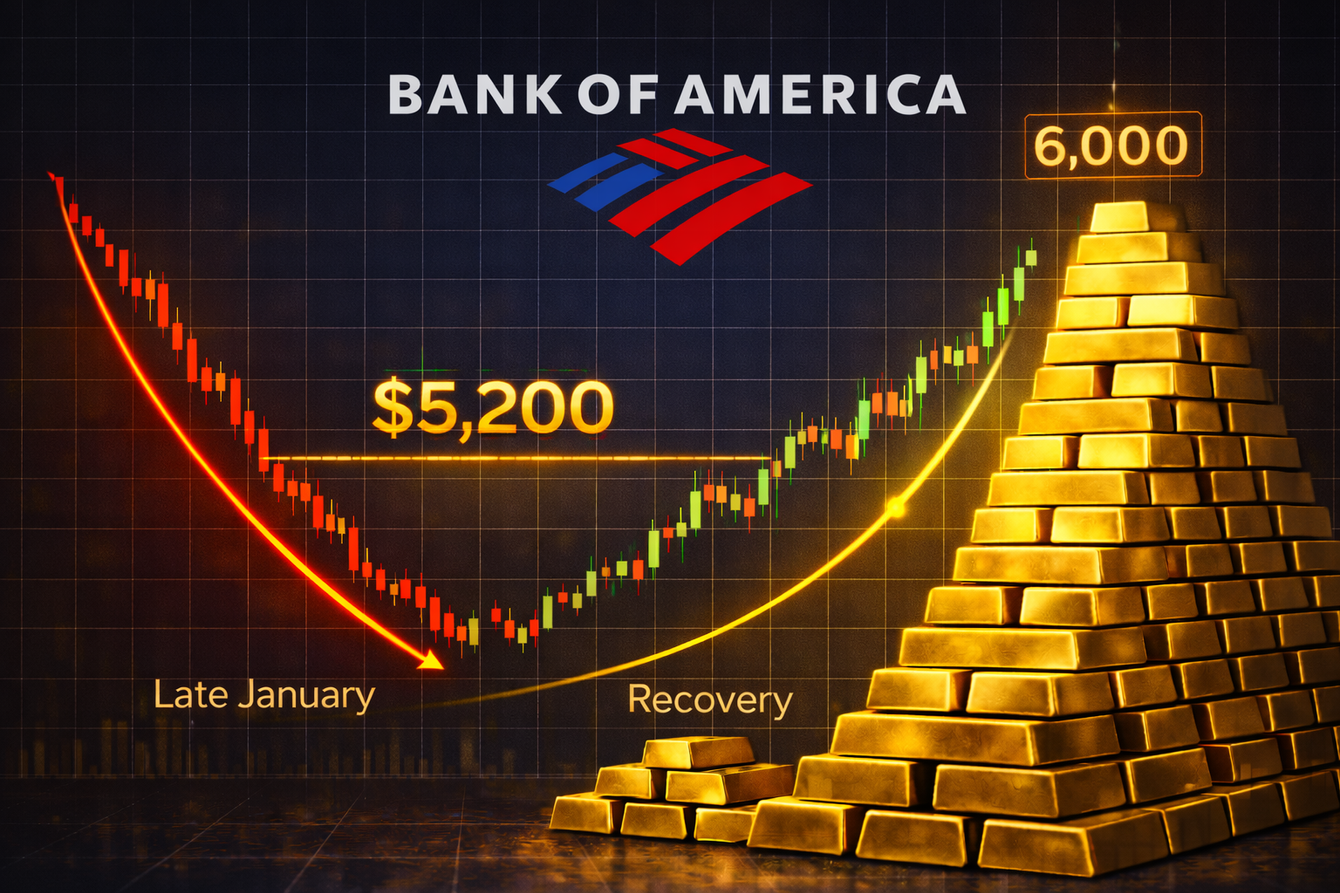
Although gold prices are encountering some near-term resistance, the market is looking to end the month on solid footing as prices have recovered from the late-January selloff. Spot gold last traded at $5,153.40 an ounce, up more than 5% this month.
In their latest commodity report, analysts at Bank of America reiterated their 12-month gold price target of $6,000 an ounce; however, they also acknowledged that the precious metal faces some near-term headwinds as investors adjust to higher prices.
“We are concerned about flows after the recent bout of volatility,” the analysts said. “The gold rally really took off when purchases were firing on all three engines: 1) bar/coin demand; 2) central bank buying; and 3) ETF inflows. That said, there are signs that investors have slowed the pace at which they increase their exposure to gold. Hence, we factor in a period of potentially weaker gold prices into spring, although the resurgent tariff uncertainty may make the period of consolidation relatively short-lived.”
Along with the economic threats created by U.S. tariff policy uncertainty, the analysts said the gold market needs further clarity from the Federal Reserve on its monetary policy.
Last month’s historic correction was due in part to President Donald Trump’s nomination of former central bank governor Kevin Warsh to replace Jerome Powell as the new head of the Federal Reserve.
Warsh is seen as a traditional central banker who will help the Federal Reserve maintain its political independence. However, analysts at BofA said that in the long term, Warsh’s nomination isn’t as gold-negative as the selloff would suggest.
“We acknowledge uncertainty over what the new Fed may bring. …The majority of investors expect a lower USD and higher Treasury yields. It would be unusual for a weaker US currency to be accompanied by lower gold prices. Hence, we believe the bigger question is the impact of rates. Warsh has highlighted intentions to cut the policy rate and this again should support the yellow metal,” the analysts said.
At the same time, the analysts added that interest rates are only part of the issue, as the central bank also has to deal with its massive balance sheet. Warsh has said he would like to shrink the central bank’s balance sheet, which BofA said could prove to be a difficult challenge.
“In the wake of the Great Financial Crisis, Fed Treasury purchases have provided commercial banks with ample reserves. Reducing the size of the Fed balance sheet through quantitative tightening might end up reducing those reserves, potentially causing liquidity shortages, which might then feed into the money market. At the same time, the Fed is looking to shorten average maturities of its debt portfolio, but there are concerns that this could increase the rollover risk with shorter-dated securities, while still pushing higher longer-dated rates,” the analysts said. “If all that came through without any fiscal consolidation, raising concerns about the deficit, we believe investors could once again increase their exposure to gold.
Posted by:
Jack Dempsey, President
401 Gold Consultants LLC
jdemp2003@gmail.com